

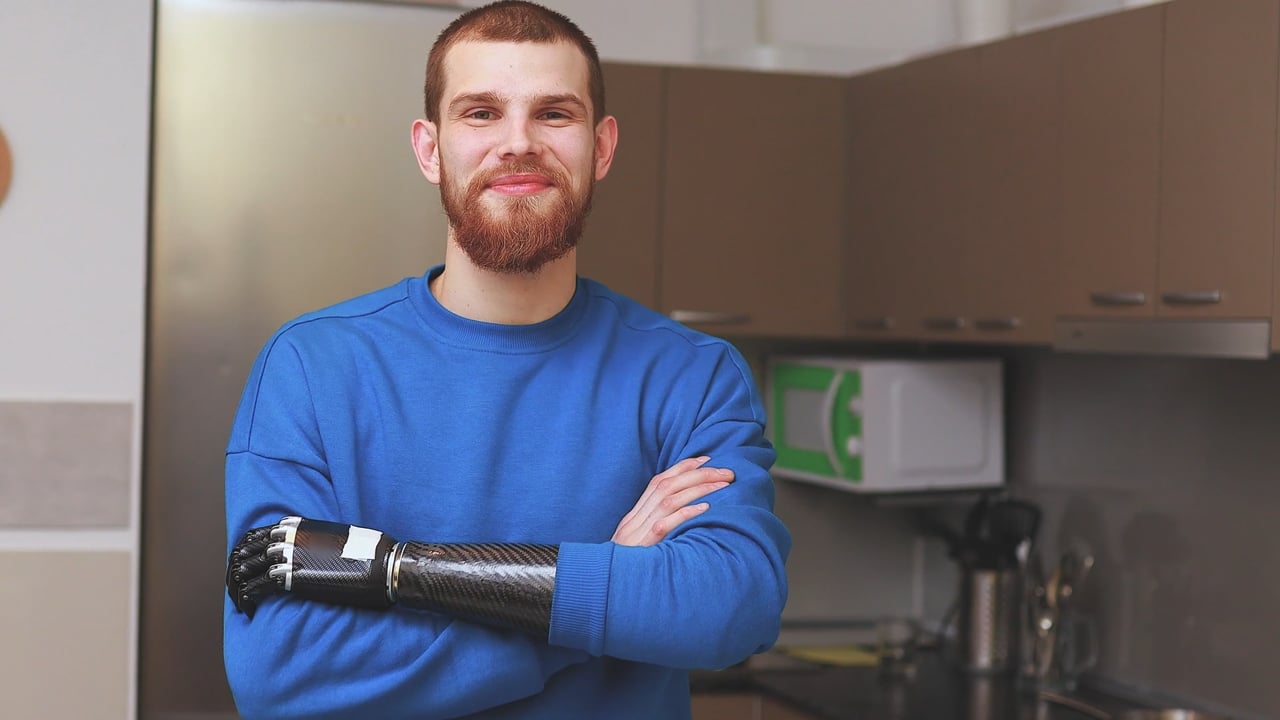

Here at Thompsons Solicitors we have been fighting for accident victims for decades. The amputation compensation lawyers here at Thompsons will treat your claim as the serious matter it is, and with our No Win No Fee guarantee, it will cost you nothing to go ahead with your claim.
What is an amputation compensation claim?
If you have suffered the loss of a limb or part of the body due to someone else's negligent action you may have an amputation claim for compensation. The reasons for such loss of limb are numerous and include road traffic accidents, workplace incidents, medical negligence, infection that was not treated correctly.
What's unique to these claims in comparison to other personal injury cases is the ongoing nature. You're not recovering from a broken arm. You're adjusting to a life with a very different body, and the compensation must acknowledge that.
Claims can be made by:
- The injured person
- Dependants of someone who died as a result of the injury
- Parents or guardians on behalf of a child
If the responsible employer or organisation no longer exists, we can still pursue the claim through their insurers.
Types of Amputation Injuries
Partial or Full Limb Amputation
Representing clients who have had a finger, hand, arm, leg or foot amputated (full or partial) is an area of our personal injury work we know well. All cases we bring have a major effect on your mobility, independence and livelihood and we will work with medical and rehabilitation professionals to ensure your compensation award is fair in light of the trauma you have suffered.
Traumatic and surgical amputations
Certain amputations are terminal at the time of the event itself — the crash, the accident at work. Others are a matter of professional opinion and are performed later, when surgeons agree that the limb is no longer viable owing to crushing injury, infection or medical mistake. In either case the rules of law and evidence are not the same, as our amputation injury solicitors are experienced in representing claimants in all circumstances.
Multiple Amputations
The more limbs a person loses the more complicated it all becomes — the claim, the rehabilitation, the lifetime care planning. Our solicitors have a wealth of experience dealing with multiple limb claims and all the expert prosthetic and other support required.
How much amputation compensation can you claim?
There is no one answer. Each case depends on its facts. However, the Judicial College Guidelines provide a typical overview of the amount of general damages (damages for pain, suffering and loss of amenity):
- Both arms: £265,000 – £330,000
- One arm: £105,000 – £150,000
- Both hands: £154,000 – £221,000
- One hand: £105,000 – £120,000
- Leg amputations: £107,000 – £297,000
- Foot amputations: £92,000 – £221,000
- All toes: £40,000 – £61,000
These figures are no more than one part of the sum. The whole agreed settlement will also include special damages — the real financial losses — and future care. In severe, above-knee amputations or those involving more than one limb, the entire figure frequently exceeds six or seven figures.
We will have your lawyers valuing your claim based on past medical costs, loss of earnings, the effect of the injury physically and mentally on your family and yourself and your future needs.
Types of compensation for amputation injury
General damages are awarded for pain, suffering and loss of amenity. The figures in the brackets provide an indication. The exact amount will depend upon the degree to which the amputation has been carried out and on its practical consequences as determined by the evidence of a doctor.
Special damages cover what you have actually spent or lost — treatment expenses, travel to appointments, temporary and permanent loss of earnings, prosthetic limbs, home alterations, car modifications, care bills.
Future losses are what has yet to occur. Prostheses will require replacement. Rehabilitation continues. Income may never reach its pre-accident level. If any future care is required, we put a value to it and include it.
Interim payments are extremely important, and we seek them in all cases we are able to. Having to wait months or even years for a final settlement while you are struggling to have a prosthesis fitted, or your home modified, or just help with the mortgage is not something anyone should have to endure. An interim payment is a sum of money paid during the progress of a claim to enable you to meet urgent expenses.
The amputation claims process
We take everything in a step-wise approach and keep you updated at every step.
Free consultation. We discuss the facts of your case, evaluate the merits of your claim, and guide you through your options. Free, no obligation.
Collecting evidence. We collect all the relevant medical reports and witness statements and other evidence needed to prove which party was liable. For more complicated injuries, we instruct professional medical experts to get a clear picture of your condition and outlook.
Negotiation. We speak to insurers and defendants for you. We would not recommend accepting any settlement that fails to represent your losses appropriately.
Settlement or court. Most amputation claims settle without the need for court proceedings and are resolved through negotiations. If the defendant refuses to accept a reasonable settlement figure we prepare the case for the court and act for you throughout the process. Quite often the mere fact proceedings are issued will be enough to persuade the defendant to reconsider its position.
Time limits
In Scotland, you generally have three years from the date of the accident — or if later, the date you discovered that your injury was caused by someone else's negligence — in which to bring a claim. Children have three years from their 18th birthday to do so. There are different rules for those who are legally incapacitated. Our recommendation is always to come and talk to us sooner rather than later.
Living with an amputation
Physical recovery is only one aspect. For others, there are chronic issues with mobility, mental health, occupation and confidence in the daily routine. Appropriate intervention, at the right time, makes a quantifiable difference.
Prosthetics and rehabilitation
Following surgery, the NHS will generally have a prosthesis available within six to eight weeks. However provision on the NHS is limited — safety is valued more than function. Microprocessor knees, sports limbs, cosmetic finishes and partial-hand prosthetics are often unavailable.
Your claim enables us to put you in touch with a private prosthetic provider who can supply the most advanced limbs fitted for your lifestyle — whether that entails returning to sport, driving or just having a prosthesis that is comfortable and looks appropriate. We have links with prosthetists and rehabilitation teams to establish the most useful solution.
Psychological support
Depression is one of the most common complications of amputation, affecting around a third of amputees. Grief, frustration, anger, embarrassment and social withdrawal are perfectly normal, and very understandable reactions to the loss of part of your body. Psychological support is not a luxury, and will influence your rehabilitation immensely. We ensure that psychological intervention and support are included in your claim, and try to get you quick access to it.
Home and vehicle adaptations
There may be modifications needed in your home such as wider doorways, a bedroom on the ground floor or an accessible bathroom. The same goes for your car. This can be claimed for. Sometimes the cost of moving to a more suitable property or buying an adapted vehicle can also be reclaimed.
No Win No Fee amputation claims
No one should be put off claiming justice through financial worries. We work on a No Win No Fee basis throughout Scotland. There are no costs in advance. If we fail, there are no costs at all.
If we win, our fees are agreed upfront, and explained fully before you sign up, so there are no surprises. You know exactly where you are from day one.
Amputation Compensation Claims FAQs
We have been representing individuals with serious injuries for over 40 years. Thompsons is a claimant-only practice — we have never represented an employer or insurer and have no plans to do so.
What that means in practice:
A track record of high-value amputation settlements across Scotland
- We involve medical and rehabilitation specialists from the start, not as an afterthought
- We push for interim payments so you can access prosthetics, treatment and home adaptations without waiting for the final settlement
- No Win No Fee, with fees agreed and explained before you commit
- Offices across Scotland: Glasgow, Edinburgh, Dundee and the Scottish Borders
Contact Our Amputation Compensation Lawyers
If you or a loved one has experienced an amputation due to the negligence of others, our dedicated amputation solicitors can assist. Call us now for a free, no-obligation consultation to discuss your case.


